





Are there any things you as a team have had to overcome?
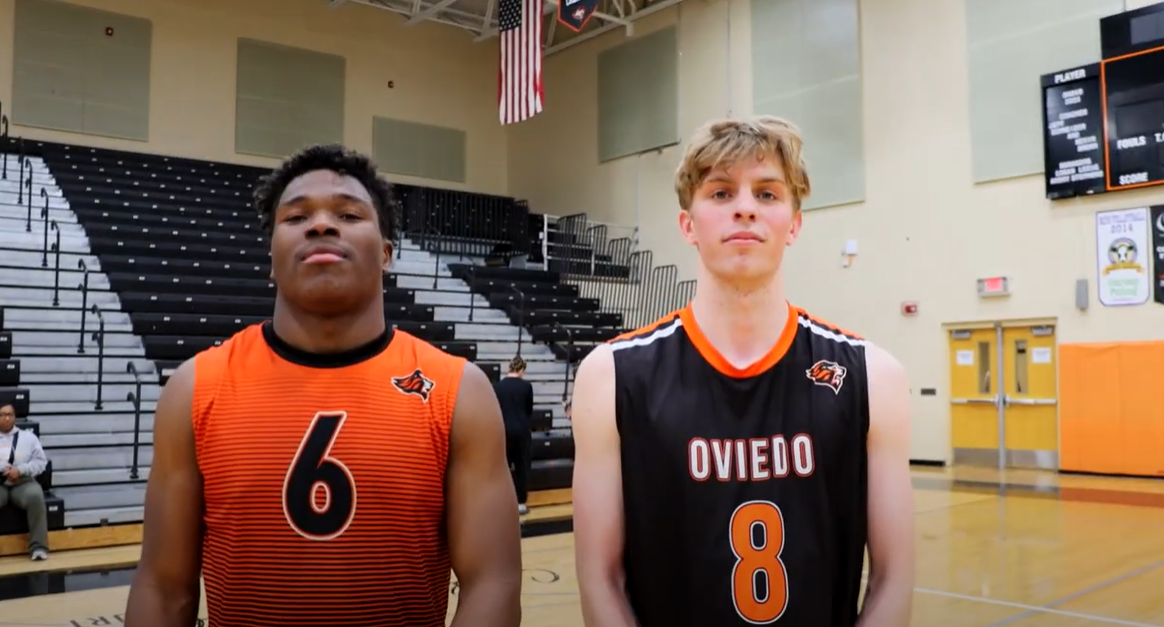
Cody Moise: Yes. As an example, our spring season has multiple sports in one day, so we’ll have baseball, volleyball, football and lacrosse and we’ve had to figure out how we are getting trainers and kids to each place and how we’re transporting everything without an extra golf cart.
Olivia Rodriguez: We have a lot of seniors this year, so trying to find new members that are younger and training them to be good enough for next year has been a challenge.
Does that mean that no one wants to join the club or no one knows about the club?
OR: I would say some people don’t know about it or don’t even know that they can join it. Because a lot of us have been here all 4 years, but since we’ve been here 4 years, we have to train the new kids. So we’ve been doing recruiting and stuff for freshmen and stuff like that.
Is Athletic Training a class or club?
CM: It’s both, so basically you start off in the club and then there’s only a selected amount of people who can take the class and you have to have done it for at least a year and show that you’re interested and that you want to learn more and you get selected based on your hours and how long you’ve been doing it. Your hours show your effort and desire to be in the club. Once you get into the class you do more hands-on activities.
How is Athletic Training run?
CM: The classes, especially during football season, have a lot to do — like there’s always athletes in there, and there’s always waters to be made and different things, so we’re split up doing our own tasks.
OR: When it’s not super busy, we’re learning new skills, so the class gives you the chance to learn more and gain more experience.
What about Athletic Training would the average person not know?
CM: I would say different ways to treat different injuries and that different taping skills can help with different pains. I feel like an average person wouldn’t really know that without going to us.
What lessons have you as a group learned?
CM: I’ve learned a lot of time management. You also need leadership, because you have to know how to step up when things need to be done.
OR: I’ve learned a lot of initiative and integrity cause there’s not always gonna be a head trainer around you, like she said, there could be three sports going on at one time, so you have to have the integrity to do what you’re supposed to be doing when no one’s watching you. That’s been a big thing that I’ve taken out of it is having integrity.
CM: Also teamwork is very important as well as communication, because there’s been times where communication has lacked and, like, there’s been problems because of it. Communication is a huge thing with Athletic Training as well.
How do you work as a team?
CM: We have group chats in case someone can’t come to a specific game that they’ve been assigned. It helps us communicate to each other about who can cover whose shifts. We also make a schedule about two weeks prior so that everybody knows where they’re going, who they’re training with and what they’re training for. We like to plan ahead to avoid chaos and rushing.
OR: Teamwork is really important for the club and I feel like we try to create a safe and organized environment. Younger ones, they’re not afraid to ask us questions and learn. Teamwork’s important so that we’re not bossing them around. We also do things outside of athletic training to try to get that bond. Everyone’s the same, we hang out with each other and some of my best friendships have sprouted from this club. We also do Christmas parties, Thanksgiving parties, stuff like that. So it truly is a team, but also a family.
What expectations do you have for trainers?
CM: Integrity, just knowing to do the right thing and initiation has been really highly expected of us, but also being reliable. I think that’s something they expected from us a lot because there’s only three head trainers and there’s always a lot going on, so we’re expected to keep up with what our job is and our responsibilities because they depend on us.
OR: I would say the same. You can’t wait around for them to tell you what to do. I’ve been here, in the club, for 4 years and we know what needs to be done. We do what needs to be done or we like to help the other ones that are newer and tell them, “Hey let’s start doing this” because we know what needs to be done. They don’t have to remind us, you know? We know what each sport needs so we can help out by being a leader.
What is a way you as a group have succeeded in Athletic Training?
CM: Something we have been successful with this year is actually making sure that everyone in the club has the skills they need to be on their own. Previous years, there wasn’t really any action taken to really teach those younger ones, but this year we started days where the newer trainers would come in and us captains would teach them so that they at least aren’t as nervous or as scared of being in the group. So that’s a success.
OR: Yes, so, to add to that, everyone in the club knows how to do certain skills that you need to be certified. We had a skills day and we got around 11 people certified in one day, so it was a success that they’re willing to learn and then we were able to teach them.
What is a skills day?
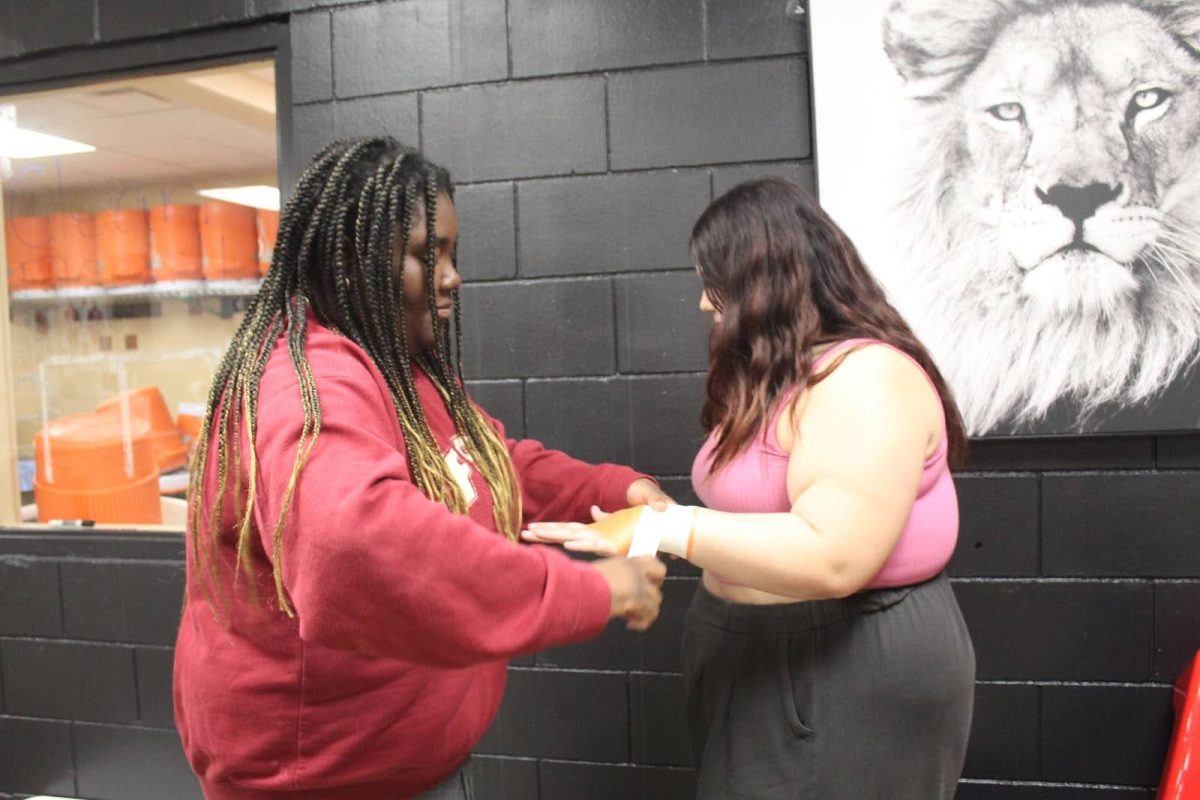
OR: For example, for wrist taping you have to get approved by the head trainers that your wrist taping is good enough to be performed on athletes. In order to get certified, you do it on each other and then you would do it on the head trainers and they’ll make sure it’s good. It helps make sure your technique is pretty good, and once you’re certified, you could then use it on athletes when the head trainer’s not there, or the trainer is doing something else for another person. We were able to certify them in two different ways, for wrist taping and finger taping, and we also taught them ice and how to properly do ice for different injuries and different body parts.
How has the program changed throughout the years?
CM: I think the program has been more inclusive. Now our coaches check in and are always asking “What do you worry about?” [and] “Do you have any issues?” and I feel like we’re very well known now, because in my freshman year, it was kind of hard to figure out how to become an athletic trainer. I think now we make it very clear on the steps you can take and you can see where we’re located.
OR: I think things have changed in terms of leadership, because when we first started, the kids that were in leadership would sort of fight with each other so we didn’t get to learn as much. Now that we are in leadership we are able to flip the experience and those that are younger can learn and can be more successful.
How does the program benefit athletes other than just injuries?
CM: We definitely support them more than just physically. Their injuries affect them mentally, so they always know that if they need someone to talk to we’re always here. They’ve always come to us for the little things too. We just like to keep them motivated. The training room really is a safe space for all of our athletes. No matter what sport, they could always come get support.
OR: They also sometimes struggle because they can’t really advocate themselves to their coaches, so we make sure that their coaches know their body comes before the sport.
What does Athletic Training lead you to do in the future/what doors does it open?
CM: This club is probably one of the most hands-on clubs you could do if you want to go into the medical field. Depending on which field you want to go into, it could really help with the basics. Say you wanted to go into physical therapy or athletic training or something like that, it would be very helpful because you learn about the different body parts, different injury names and you also learn things like CPR or 1st aid. It just depends on what field you’re going into.
OR: It gives you good basic skills for training, but also just a leg up in anything medical. You learn basic 1st aid qualities in CPR, so it’s good to have that knowledge before you go into college. There’s also scholarship opportunities at the club. If you’re going into anything medical or orthopedic, scholarships can be found through the club. It also helps with skills for any job and adulthood such as leadership, time management and communication.

Bill Hovanetz • Feb 27, 2026 at 7:57 PM
A very informative article, covering many aspects of the program.